
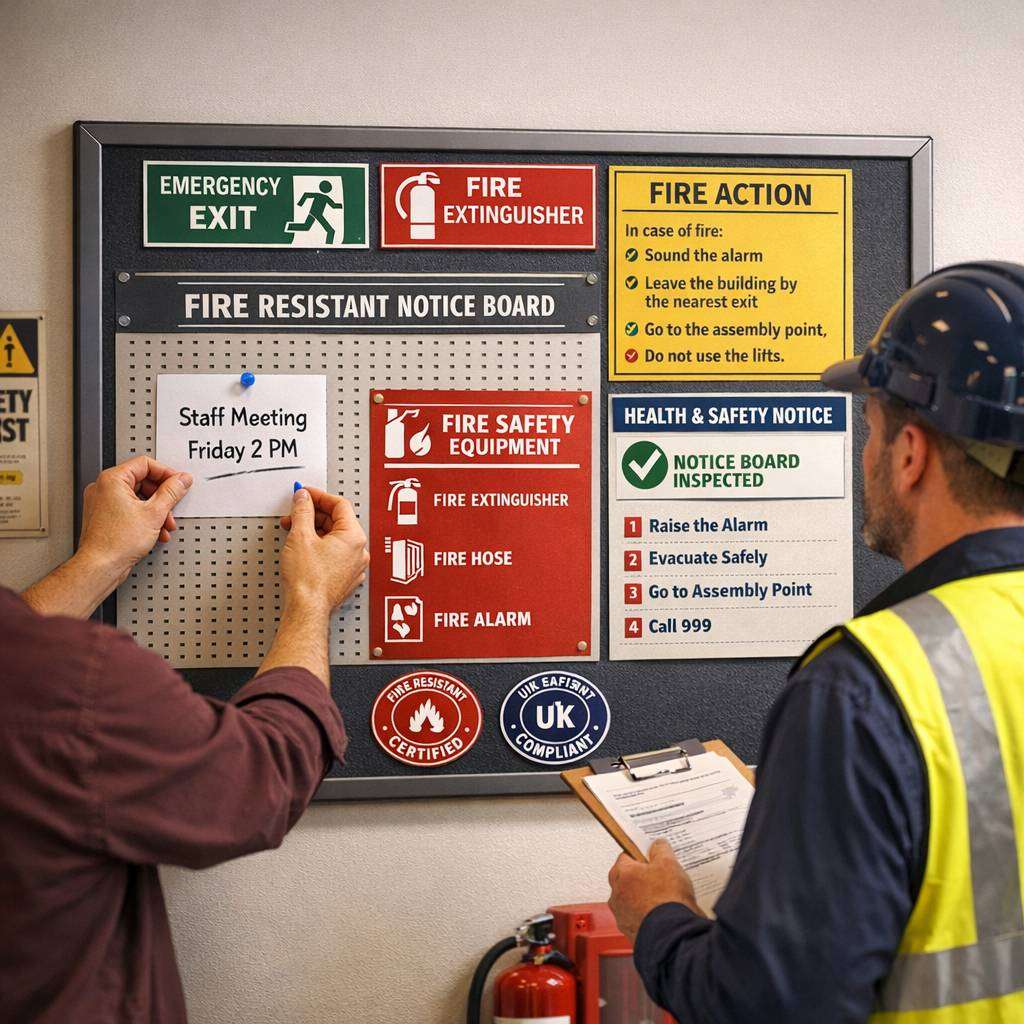
Fire safety in the workplace is a cornerstone of responsible facility management. Among the many tools available to harden environments against fires, fire resistant notice boards play a pivotal role in safeguarding occupants and ensuring regulatory compliance. This article explains how fire rated notice boards, fire rated noticeboards, fire proof notice boards, fire retardant noticeboards, fire rated lockable notice boards, fire retardant display boards, and fire proof bulletin boards contribute to safety and regulatory adherence in modern workplaces.
The role of fire resistant notice boards in safety management
Fire resistant notice boards are designed to preserve the integrity of information and notices during a fire or in high heat. Unlike conventional boards, which may warp, ignite, or emit toxic fumes, fire rated notice boards are constructed from materials tested to withstand specific temperatures for defined periods. In an emergency, clear, legible information about evacuation routes, assembly points, and shut-off procedures must be readily accessible. Fire resistant notice boards help ensure that emergency information remains intact long enough for occupants to act decisively, reducing confusion and improving evacuation outcomes.
For larger facilities, the ability to post critical safety information in protected areas—such as near hoists, electrical rooms, or chemical storage—can be a lifesaver. Fire proof bulletin boards and fire retardant display boards provide a robust solution for locations where the potential for heat exposure is higher. Their materials and seals are chosen to resist heat, smoke damage, and accidental impact, thereby preserving not only information but the protective messaging that informs safe behaviours.
Regulators expect durable, compliant messaging
Regulatory frameworks across the UK emphasise timely, clear, and durable communication of safety information. The use of fire rated notice boards aligns with standards that require fire safety signage and instructions to remain visible during incidents. Fire rated notice boards and fire retardant notice boards are designed to meet or exceed recognised fire resistance tests, ensuring that notices survive the conditions of a fire event for the required duration. This resilience supports compliance with health and safety regulations, including those governing the maintenance of safe egress information and staff training materials.
Moreover, fire rated lockable notice boards address privacy and security needs without compromising safety. In areas such as laboratories, data rooms, or staff rooms containing sensitive information, locking mechanisms ensure that critical notices remain accessible to authorised personnel while preventing tampering. When regulatory bodies audit a workplace, demonstrable evidence of using certified fire resistant notice boards can be a straightforward way to show commitment to safety standards and secure information management.
Protecting information, people, and property
A primary function of fire retardant notice boards is to protect essential notices and safety procedures from heat and smoke damage. In the event of a fire, smoke can obscure clear signage, and heat can cause paper to burn or warp. Fire retardant display boards and related products are engineered to maintain legibility, enabling occupants to locate emergency exits, muster points, first aid locations, and contact details for emergency teams. This reliability reduces the likelihood of delays in initiating evacuation and responding to the incident.
Fire resistant notice boards also support ongoing safety training by providing a durable platform for health and safety notices, catch-up training schedules, and updated risk assessments. Fire proof bulletin boards offer a stable, long-lasting medium for communications in high-traffic areas where notices may be subjected to daily wear and tear. The combination of durability and clear presentation helps ensure that critical safety information remains visible and understandable at all times.
Fire resistant notice boards are essential for safety-focused workplaces, schools, and public buildings. They protect important information from heat and flames while maintaining readability and organization. Durable materials, clear labeling, and compliant certifications ensure long-lasting performance. When selecting fire resistant notice boards, consider mounting options, size variety, and maintenance needs. For more information, visit https://www.displaydevelopments.co.uk. This resource supports informed procurement and compliant installations.
Choosing the right solution for your workplace
Selecting the appropriate fire resistant notice board depends on a few practical considerations:
- Location and exposure: Areas with higher heat, moisture, or potential for impact may benefit from fire rated notice boards with reinforced frames and sealed edges.
- Accessibility: Fire rated notice boards should be placed where staff can easily reach without compromising egress routes. Fire rated lockable notice boards are ideal where confidentiality is required.
- Capacity and update frequency: Consider the size of notices needed and how often information is updated. Larger boards, including fire retardant display boards, accommodate frequent changes while maintaining durability.
- Maintenance: Look for products with low maintenance requirements and clear warranties. Regular inspection ensures seals remain intact and notices stay legible.
For many organisations, installing a mix of fire rated notice boards and fire retardant display boards across varying departments provides comprehensive protection. The fire resistance ratings should be specified to match local fire safety codes and insurer requirements. When in doubt, consult a fire safety consultant or the supplier’s technical data to verify the board’s performance under expected conditions.
Installation and maintenance best practices
To maximise safety benefits, proper installation is essential:
- Fix boards securely to walls at appropriate heights, ensuring they do not obstruct fire doors or escape routes.
- Use fire rated lockable notice boards in sensitive areas to balance accessibility with security.
- Ensure seals and gels used to mount boards do not compromise the fire rating of the board.
- Label boards clearly with dates indicating when notices were last updated and reviewed, aligning with statutory safety reviews.
- Schedule routine inspections to check for signs of heat damage, delamination, or fading of writing, and replace as needed.
Regular maintenance also involves updating notices promptly after changes to procedures, staff contact information, or evacuation routes. This ensures that in an emergency, occupants rely on current guidance rather than outdated instructions.
Fire resistant notice boards provide safety and compliance for workplaces, schools, and public buildings. displaydevelopments.co.uk Durable, certified materials ensure fire rating integrity while maintaining clear messaging, easy updates, and tamper-resistant mounting for reliable incident communication and evacuation readiness.
Benefits beyond compliance
Beyond regulatory compliance, fire resistant notice boards contribute to a culture of safety. Employees become more aware of safety practices when they see visible, durable signage and well-maintained information hubs. A well-planned deployment of fire rated notice boards—whether fire rated notice boards, fire rated lockable notice boards, fire retardant notice boards, or fire retardant display boards—signals organisational commitment to protecting people, property, and continuity of operations.
In summary, fire resistant notice boards are a strategic, practical component of a comprehensive fire safety plan. They preserve critical information during incidents, support regulatory requirements, and promote proactive safety behaviours across the workplace. By selecting appropriate fire rated notice boards and related products, organisations can enhance both protection and performance in the face of fire risks.